Now is the time to engage your fit out contractor with Summer 2027’s high temperatures in mind.
Planning office upgrades for Summer 2027? How early contractor engagement, long-lead plant procurement and retrofit planning keep occupied commercial buildings operational.
Ireland has just come through its hottest summer since records began in 1900. Met Éireann recorded a national average temperature of 16.28°C, narrowly surpassing the previous record set only a year earlier. It means Ireland has now had its two hottest summers on record back-to-back.
For commercial property owners, September is a useful point to look back at how buildings performed through those months. That does not lead to the same conclusion for every office. Buildings differ enormously in age, condition, occupancy, orientation and the systems serving them.
The more useful question is whether the summer has highlighted anything that was already moving towards the top of the capital works programme.
For some buildings, that could be ageing mechanical plant. For others, it may be found within a much wider programme of energy upgrades, refurbishment or repositioning.
And there is another reason that conversation is becoming harder to postpone.
Older offices are coming under more pressure to improve
Europe’s building-energy rules are moving progressively towards the existing building stock.
Under the updated Energy Performance of Buildings Directive, Member States are required to introduce minimum energy performance standards for non-residential buildings. The first thresholds are aimed at the poorest-performing 16% of national non-residential stock by 2030, increasing to 26% by 2033. Individual countries will determine how those thresholds apply within their own building stock, with exemptions available in certain circumstances.
Ireland has already begun introducing parts of these updated EU energy rules. Regulations introduced in May 2026, for example, brought zero-emission buildings into the Irish framework and changed the BER scale, including the introduction of the A0 category.
The important point for commercial property owners is the direction rather than any single regulation.
Energy performance is becoming a bigger part of the long-term conversation around existing assets. Alongside that sit tenant expectations, operating costs, ageing services and the normal requirement to keep commercial buildings attractive to occupiers and investors.
That puts retrofit and upgrades into the asset-management conversation: if a building needs significant work, how do you carry it out while that building continues to earn its keep?
Existing buildings come with embodied carbon - but certain constraints
In many commercial buildings, major upgrade works have to be delivered while tenants remain in place and the building stays operational.
A landlord may have several tenants occupying different floors. Reception is still operating. Meetings are taking place. Existing services are keeping the building running. Neighbouring businesses may also place restrictions on when noisy or disruptive work can happen.
At the same time, the existing building itself can dictate how the project has to be delivered.
“A lot of the mechanical and electrical installations have reached their end of life and need to be renewed.”
On one project, the existing mechanical plant is located in a rooftop plant room. Replacing it involves a series of weekend crane lifts to remove the existing equipment, bring the new plant onto the roof and carry out the associated works while the tenants remain in occupation below.
What a summer like 2026 can do is prompt a useful review of work that may already have been anticipated. If plant is nearing the end of its working life, an energy upgrade is being considered or a wider refurbishment is planned, there is value in looking at those requirements before another summer arrives.
You always know your client is happy when they ask you to design two more projects. We’ve just completed a second Liberty IT project in Galway and are commencing another project in Belfast .
Patrick Wilding
Design Lead, CBRE Design Collective
Delta Airlines
"Lorem ipsum dolor sit amet, consectetur adipiscing elit. Donec orci diam, lacinia ut massa tincidunt, faucibus commodo."
Walt Disney
Lorem ipsum dolor sit amet, consectetur adipiscing elit. Donec orci diam, lacinia ut massa tincidunt, faucibus commodo.
MetLife
Lorem ipsum dolor sit amet, consectetur adipiscing elit. Donec orci diam, lacinia ut massa tincidunt, faucibus commodo.
Twenty weeks changes the conversation
One of the less visible constraints on major upgrade projects is procurement.
Mechanical plant can carry significant lead times. During a Built discussion on pre-construction, Commercial Director Adrian Smith described projects where that was already changing when the contractor needed to become involved.
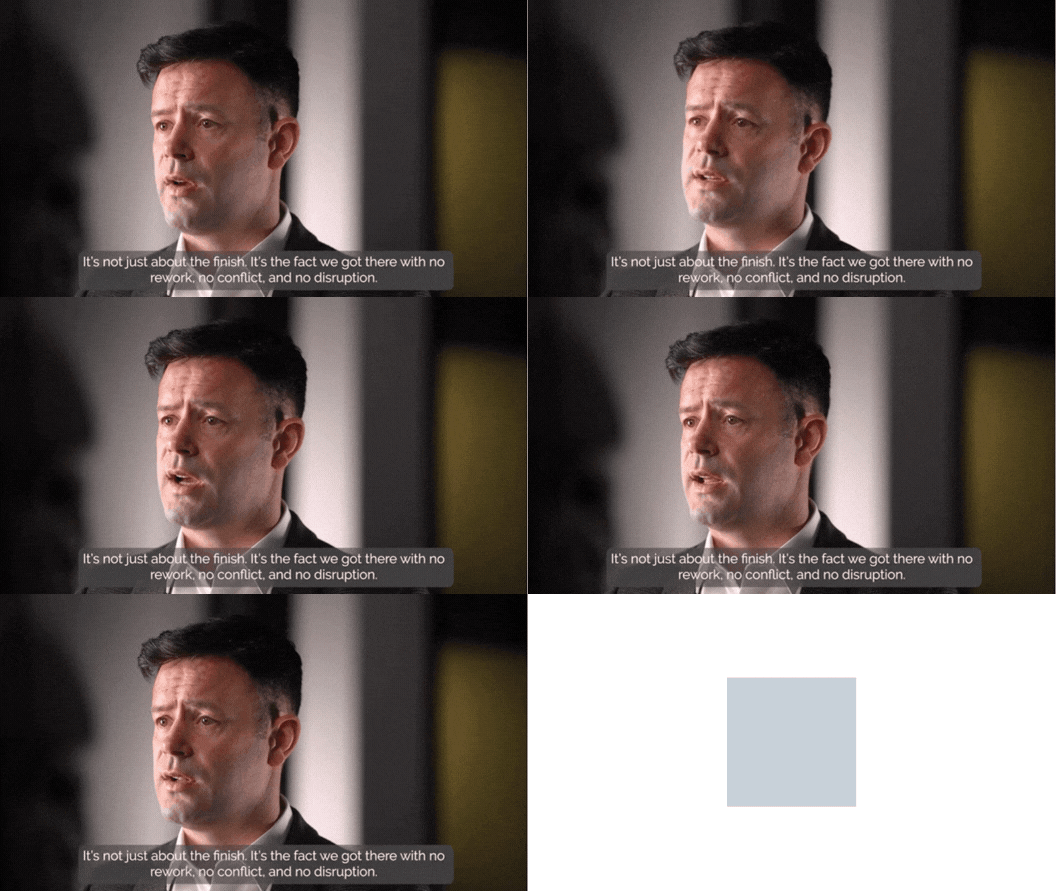
“In some instances you've got plant that might be on a 20-week lead time… it needs to be ordered prior to us even getting to site.”
If a contractor arrives on site before long-lead equipment has been procured, the construction programme is affected by when that equipment becomes available. Earlier involvement gives the team time to get those orders moving before mobilisation.
A twenty-week lead time quickly changes what “planning for next summer” actually means.
There may also be surveys, design coordination, approvals, temporary works and logistics to resolve before an order can translate into installation.
The contractor then has to interrogate the reality of the building.
Where does the replacement plant physically go? How does it get there? Does it require craneage? What builder’s works surround the mechanical package? What access is available? Which existing services have to remain operational while the work is undertaken?
Those questions are separate from the design work carried out by the architects, engineers and wider project team. Their job is to establish the required solution. The main contractor then has to work out how that solution can be safely and practically delivered within the constraints of the existing building.
Built’s experience across live commercial environments shows how quickly relatively ordinary construction activities become programme issues once an occupied building is wrapped around them.
That is the part of retrofit that tends to receive less attention than the finished specification.
An upgraded building may ultimately have better-performing systems, improved energy credentials or a stronger proposition for future tenants. Getting there can involve months of procurement, sequencing and coordination while the asset continues operating every day.
The case for looking early
Summer 2026 alone does not determine what work an office building requires - the longer-term pressure on existing commercial buildings is becoming much clearer.
European energy-performance requirements are moving towards the poorest-performing non-residential stock. Owners are already looking at the competitiveness and energy performance of existing assets. Mechanical and electrical installations in some older buildings are reaching the end of their working lives.
Those issues will not land simultaneously on every building, and the solution will be different in each case.
Plant can take months to procure. Major works have to be fitted around existing occupiers. Access, logistics and builder’s works can influence the programme long before construction begins.
It takes time to review how a building performed, understand what is already approaching renewal and work out how any future upgrade can be delivered while the building continues doing the job it was built to do. Now is the time to engage your fit out contractor with Summer 2027’s high temperatures in mind.